
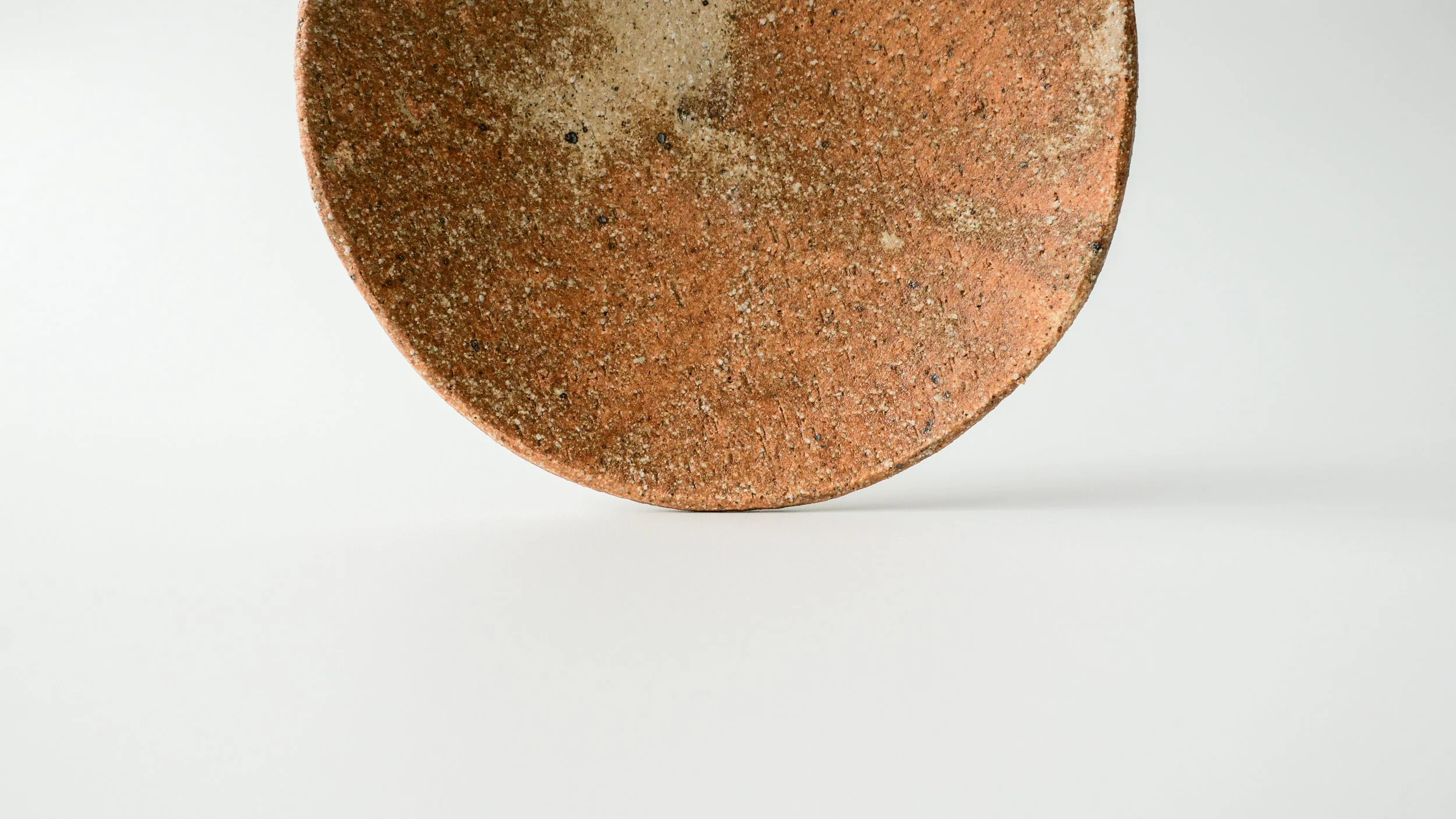
Products
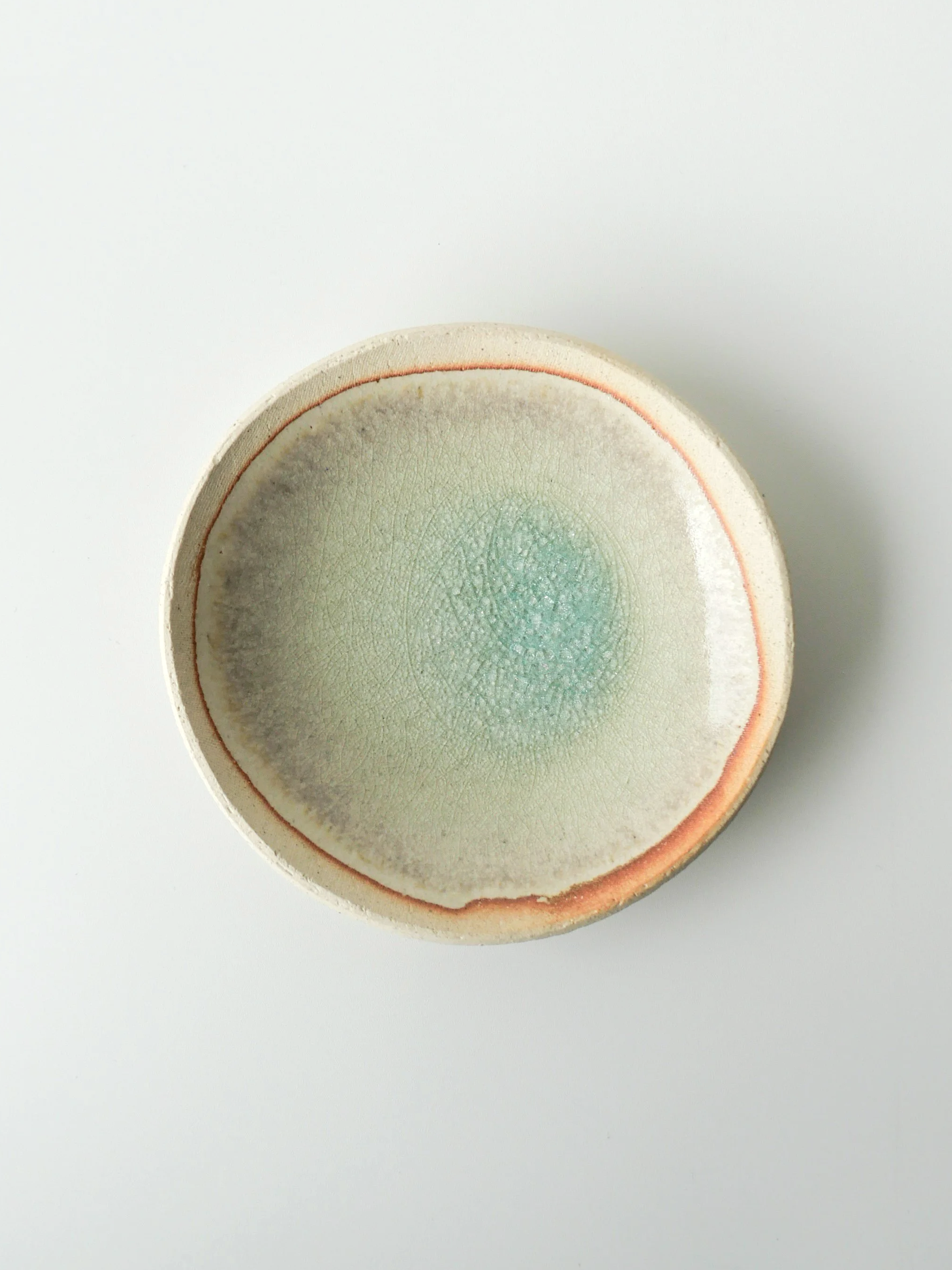
A pool of glass at the centre, catching the light.
Made one by one in Shigaraki, where the clay is left to speak for itself.
Vidro glass centre — pooled and fired so the light sits in it
Reassuring weight — thicker than it looks, steady in the hand
Two textures — smooth glaze on top, raw clay underneath
Everyday size — holds a main course, fits a cupboard shelf
Dishwasher safe — coarse clay, so let it dry fully
Size
15 × 15 × 0.5 cm / 270 g
About Shigaraki ware
Shigaraki has been firing pots since the twelfth century — one of Japan's six ancient kiln towns. The clay there is coarse and full of iron, and the potters have never tried to hide it. A Shigaraki piece shows you what it is made of.
What happens in the kiln is only partly under anyone's control. The fire finds the iron, and the surface comes out differently each time. That unpredictability is the reason tea masters have wanted these pieces for four hundred years.
These are made at Shigaraki Seinenryo, a workshop in the town.
Dishwasher safe. Shigaraki clay absorbs water more readily than porcelain, so let each piece dry thoroughly after washing.
Handmade, so expect variation of up to about 1cm. Some photos are styling references.
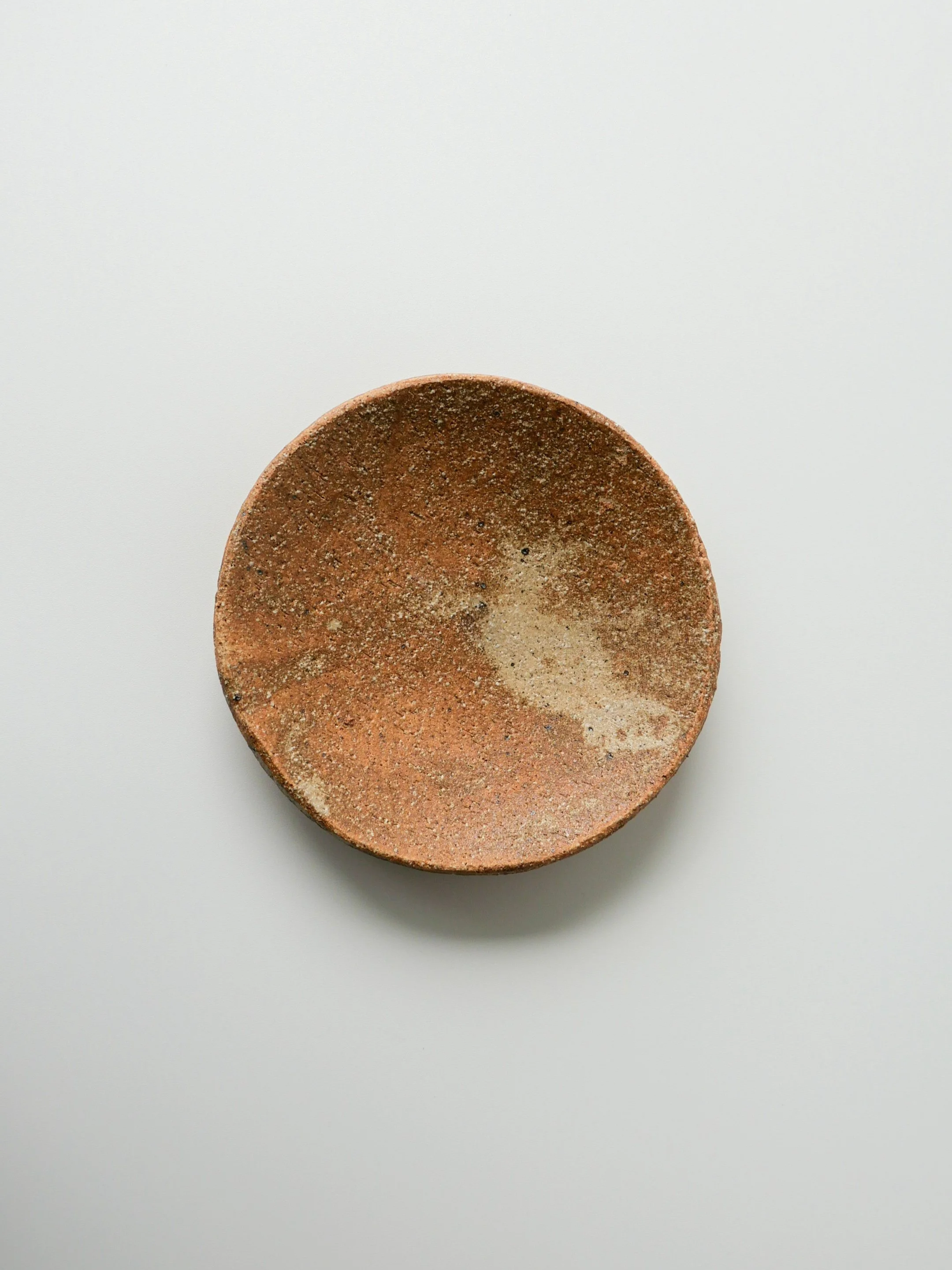
Unglazed on the rim, so you touch the clay itself.
This is the plainest thing we sell, and the one I use most.
Raw clay surface — rough to the fingertips, deliberately
Iron speckle — dark flecks come up through the firing
Reassuring weight — thicker than it looks, steady in the hand
Works as a base — good under a bowl, good for bread
Dishwasher safe — coarse clay, so let it dry fully
Size
15 × 15 × 0.5 cm
About Shigaraki ware
Shigaraki has been firing pots since the twelfth century — one of Japan's six ancient kiln towns. The clay there is coarse and full of iron, and the potters have never tried to hide it. A Shigaraki piece shows you what it is made of.
What happens in the kiln is only partly under anyone's control. The fire finds the iron, and the surface comes out differently each time. That unpredictability is the reason tea masters have wanted these pieces for four hundred years.
These are made at Shigaraki Seinenryo, a workshop in the town.
Dishwasher safe. Shigaraki clay absorbs water more readily than porcelain, so let each piece dry thoroughly after washing.
Handmade, so expect variation of up to about 1cm. Some photos are styling references.
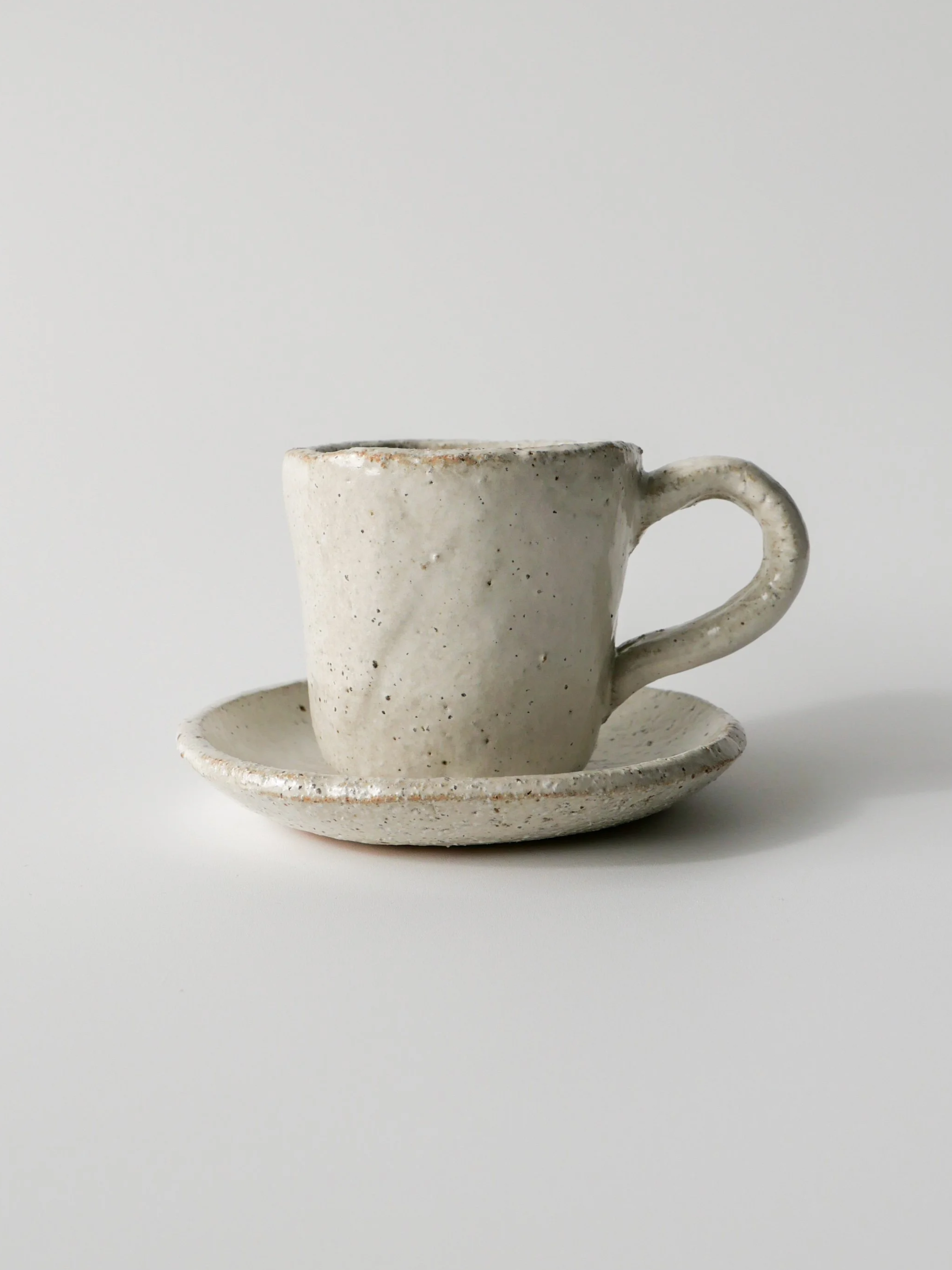
Comes with its own saucer, matched in the same firing.
The handle is bigger than it needs to be, which is the point.
Saucer included — fired as a pair, so they match
Large handle — room for two fingers, comfortable full
200ml — a proper single coffee
Minimal shape — nothing on it but the glaze
Dishwasher safe — coarse clay, so let it dry fully
Size
Capacity 200 ml
Rim ø approx. 8 cm
Base ø approx. 5 cm
About Shigaraki ware
Shigaraki has been firing pots since the twelfth century — one of Japan's six ancient kiln towns. The clay there is coarse and full of iron, and the potters have never tried to hide it. A Shigaraki piece shows you what it is made of.
What happens in the kiln is only partly under anyone's control. The fire finds the iron, and the surface comes out differently each time. That unpredictability is the reason tea masters have wanted these pieces for four hundred years.
These are made at Shigaraki Seinenryo, a workshop in the town.
Dishwasher safe. Shigaraki clay absorbs water more readily than porcelain, so let each piece dry thoroughly after washing.
Handmade, so expect variation of up to about 1cm. Some photos are styling references.
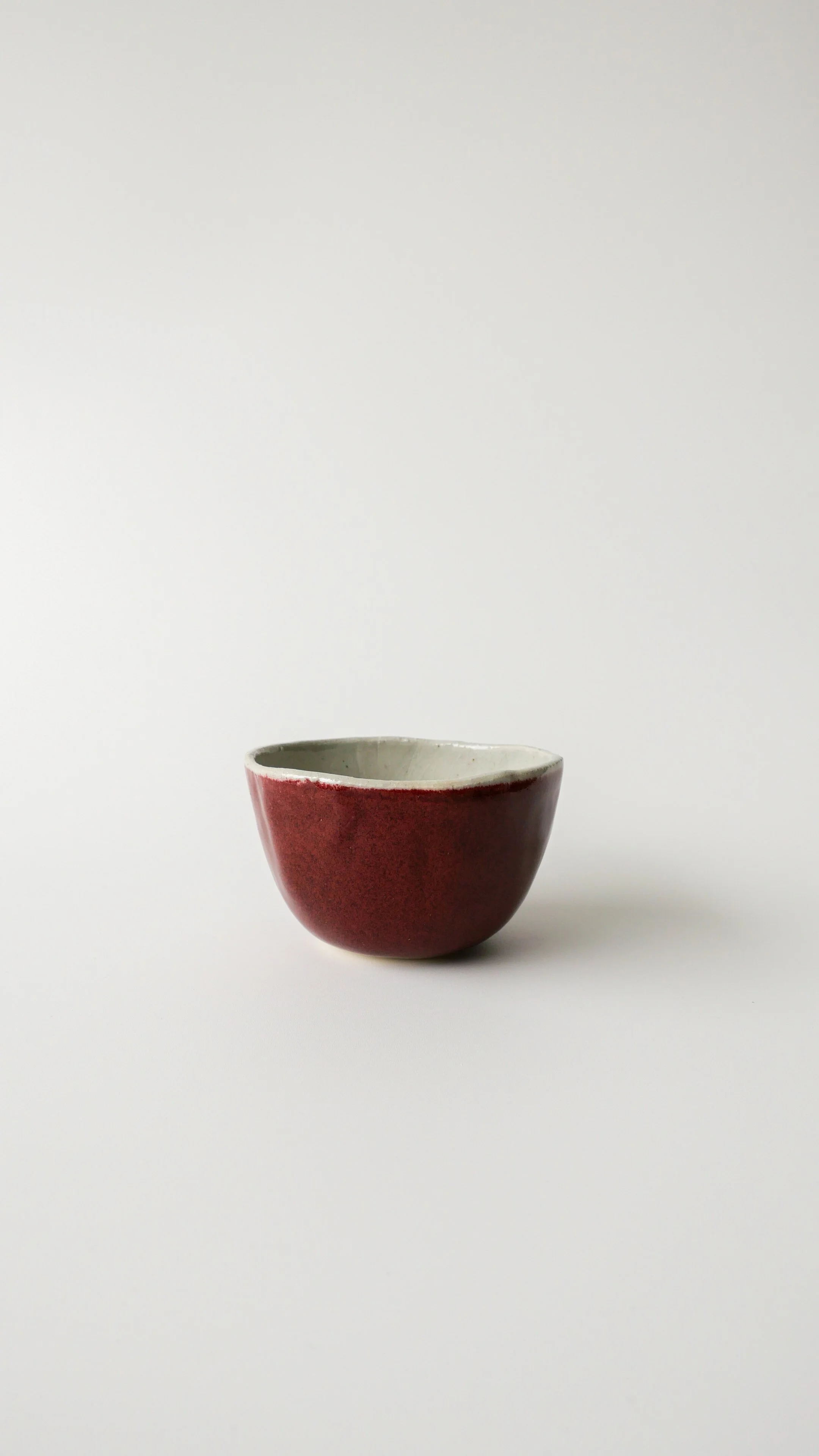
A deep red that shifts in the light, nearly brown where it pools.
Deep enough for yoghurt and granola, small enough for one hand.
Deep rich red — darker in the hollows, lighter on the rim
Good depth — 7cm, so it holds a proper portion
Easy to hold — curves into the palm
For breakfast — yoghurt, granola, fruit, soup
Dishwasher safe — coarse clay, so let it dry fully
Size
11 × 11 × 7 cm
About Shigaraki ware
Shigaraki has been firing pots since the twelfth century — one of Japan's six ancient kiln towns. The clay there is coarse and full of iron, and the potters have never tried to hide it. A Shigaraki piece shows you what it is made of.
What happens in the kiln is only partly under anyone's control. The fire finds the iron, and the surface comes out differently each time. That unpredictability is the reason tea masters have wanted these pieces for four hundred years.
These are made at Shigaraki Seinenryo, a workshop in the town.
Dishwasher safe. Shigaraki clay absorbs water more readily than porcelain, so let each piece dry thoroughly after washing.
Handmade, so expect variation of up to about 1cm. Some photos are styling references.
Journal
Introductions of the makers behind our products, and so on.
